How to Spot and Avoid Flood-Damaged Cars in the Used Vehicle Market
How to Spot and Avoid Flood-Damaged Cars in the Used Vehicle Market
Every year, major weather events like hurricanes and flash floods leave a devastating secondary threat in their wake: a massive influx of flood-damaged vehicles pouring into the national used car market.
The National Insurance Crime Bureau (NICB) warns that tens of thousands of flooded vehicles—often written off as total losses—are purchased by unscrupulous sellers at salvage auctions. These vehicles are given a superficial detail, moved across state lines, and sold to unsuspecting buyers. This practice, known as "title washing," deliberately hides the vehicle's dangerous history.
The Hidden Dangers of Water Intrusion
A vehicle that has been submerged is one of the riskiest purchases a consumer can make. The damage is catastrophic, highly corrosive, and designed to fail over time:
Electrical System Failure: Modern vehicles are packed with complex computer modules. Water intrusion causes slow-moving corrosion that will eventually short out engine control units (ECUs), transmissions, and infotainment systems.
Compromised Safety Systems: Critical components like airbags, anti-lock brakes (ABS), and stability control sensors can be permanently disabled by water, leaving you unprotected when you need them most.
Health Hazards: Trapped moisture leads to toxic mold and mildew growth deep within the ventilation system and upholstery.
Spotting the Red Flags
Professional scammers are experts at hiding the obvious evidence, but a careful buyer can spot the warning signs of a washed title.
Follow Your Nose: A persistent musty, mildew-like odor is the biggest giveaway. Be equally suspicious of an overwhelming amount of heavy air freshener used to mask the smell.
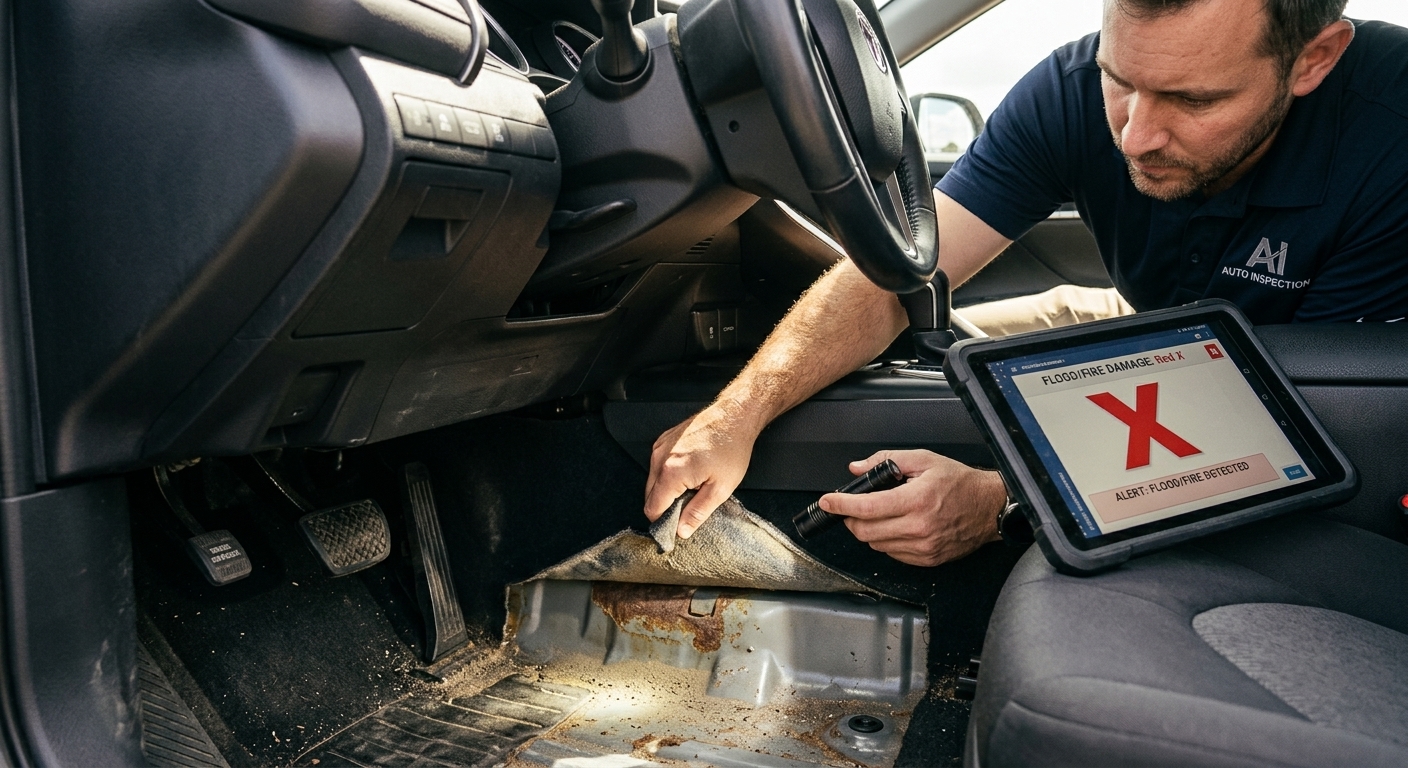
Look for Silt and Debris: Check spaces where water settles naturally but is difficult to clean: under the spare tire in the trunk, deep inside the glovebox, or beneath the dashboard.
Inspect Unpainted Metal: Look for premature rust on unpainted metal surfaces inside the cabin, such as seat mounting bolts and under-dash brackets.
Don't Blindly Trust the History Report: A CarFax is a helpful first step, but pricing and safety decisions are too often run on self-reported history rather than actual physical condition.
The Ultimate Defense: Ground-Truth Verification
Ultimately, you would never buy a house simply because it lacked past insurance claims; you would hire a professional to evaluate its current structural integrity. A vehicle purchase requires the exact same level of physical due diligence.
To bridge this trust gap, buyers must utilize independent, third-party data. This is exactly why Inspectd built the digital infrastructure for vehicle verification.
Before you sign any financing paperwork, deploy an independent Inspectd professional to evaluate the vehicle. Our VINsight™ protocol provides undeniable, ground-truth data on the car's engine, transmission, sub-frame, and hidden digital codes. Every inspection puts trained eyes on a real car, effectively turning our marketplace of independent inspectors into a powerful sensing network.
It moves you from hoping you bought a good car to knowing you acquired a verified asset. Schedule your VINsight™ Pre-Purchase Inspection today and leave the risk behind.